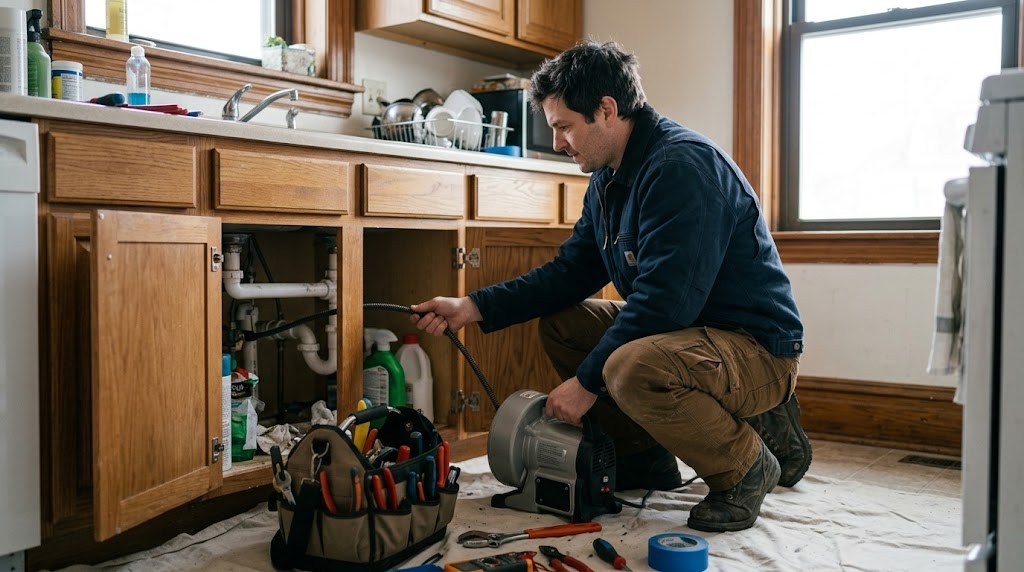
Sluggish sinks, standing shower water, and gurgling floor drains are frequent headaches for Buffalo homeowners. Decades of cooking grease accumulation, hair wads, soap scum, and tree root intrusion restrict wastewater velocity until branch lines back up into your home. Professional drain cleaning Buffalo service clears obstructions safely without corroding aging cast-iron infrastructure. At NY Plumbing, we deploy commercial-grade motorized rooters, camera diagnostics, and high-pressure jetting to restore free-flowing drainage.
Common Causes of Drain Blockages in Buffalo Homes
Western New York's historic residential housing presents distinct wastewater challenges depending on pipe age and layout:
- Cold Winter Grease Solidification: In sub-zero weather, warm cooking grease and oils poured down kitchen drains cool rapidly as they pass through unheated basement piping. The grease emulsifies, adheres to rough cast-iron walls, and catches food scraps until complete kitchen sink drain cleaning Buffalo service is needed.
- Cast-Iron Tuberculation & Rust Blisters: Drainage stacks installed prior to 1960 develop internal rust blisters and heavy mineral scale (tuberculation). This rough, snag-prone interior catches toilet paper and feminine hygiene products, creating recurring blockages.
- Hair & Soap Curd Binding: Bathroom shower and vanity drains accumulate binds of human hair cemented together by body washes and soap tallow, forming dense mats inside 1.5-inch P-traps.
- Flushed "Flushable" Wipes: Pre-moistened wet wipes do not dissolve in water like toilet tissue. They catch on pipe joints and build into heavy, cloth-like dams that choke 3-inch and 4-inch main building drains.
Why Caustic Chemical Cleaners Cause Severe Pipe Harm
When water backs up, many homeowners instinctively pour retail chemical drain cleaners down the drain. These products rely on caustic lye (sodium hydroxide) or concentrated sulfuric acid. When the chemical meets standing water, it creates an intense exothermic reaction that can reach temperatures above 180°F.
In older Buffalo homes, this intense thermal shock softens PVC glue joints, warps slip-joint washers, and accelerates corrosion along the thinned bottom channel of cast-iron pipes. Furthermore, chemicals simply burn a tiny pinhole through soft sludge without removing heavy grease blankets or intrusive tree roots. Mechanical removal with spinning steel blades is always the safer, more permanent solution.
Our Professional Drain Clearing Technology
When handling a clogged drain repair Buffalo service call, we match the exact clearing tool to the pipe material and obstruction type:
Heavy-Duty Cable Snaking
Our commercial rooter machines spin inner-core aircraft-grade steel cables fitted with C-cutter and spade blades that bore directly through dense grease plugs, wipes, and root clusters.
HD Fiber-Optic Video Inspection
Self-leveling drain cameras travel through 2-inch to 6-inch lines, transmitting real-time color footage to inspect pipe joints, offsets, root infiltration points, and bottom pipe channeling.
Recognizing Main Sewer Line Stoppages
It is critical to distinguish a localized fixture clog from a main building sewer backup. If only one bathroom vanity drains slowly, the obstruction is local. However, if running your washing machine causes wastewater to surge out of a basement floor drain, or flushing an upstairs toilet causes water to rise inside a first-floor shower, the main sewer lateral is blocked. In these situations, our technicians transition to mainline sewer service to clear the blockage before living areas are contaminated.
Frequently Asked Questions
Over-the-counter liquid drain openers contain concentrated sulfuric acid or lye that generate intense chemical heat when sitting stagnant against a clog. This extreme heat softens plastic PVC joints and rapidly eats through the brittle, corroded bottom walls of older cast-iron drainage lines without clearing stubborn root masses.
If only a single kitchen sink or vanity drains slowly, the obstruction is located in that fixture's P-trap or local branch arm. However, if running a washing machine causes water to bubble up into basement floor drains, or flushing a toilet causes water to gurgle in a nearby bathtub, the obstruction is located in the main building drain or municipal lateral.
Motorized snaking uses a revolving steel cable with specialized cutting heads to bore through solid blockages such as tree roots or toilet paper wads. Hydro jetting uses multi-directional 3,500 PSI water streams to scrub 100% of grease, mineral scale, and sludge completely off the interior pipe walls.
Cooking fats, oils, and grease washed down kitchen drains solidify almost instantly when they enter cold uninsulated cast-iron pipes passing through cold basements. As the grease congeals along pipe walls, it catches food particles and soap residue until the flow is choked off entirely.